Dial-Up Dreams: Why Young Writers Are Haunted by the Internet They Never Quite Lived
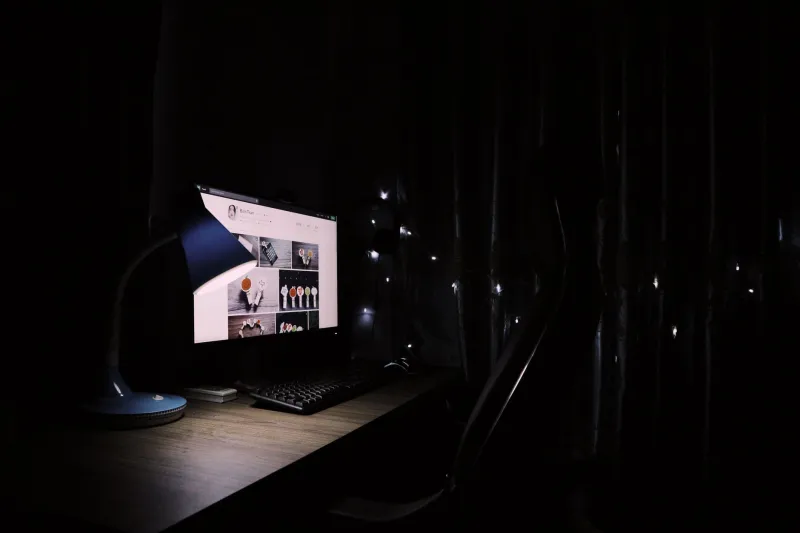
There's a specific kind of ache that comes with scrolling through someone's archived Tumblr from 2011. The blurry concert photos. The reblogged song lyrics formatted like confessional poetry. The anonymous asks answered with startling emotional honesty. It feels like reading someone's diary — except the diary was always meant to be half-public, half-private, existing in that weird liminal space the early internet loved so much.
For a growing cohort of young American writers, that ache isn't just nostalgia. It's source material.
The Aesthetic They Didn't Fully Live Through
Here's the thing about Gen Z and early internet culture: most of them were too young to actually be on Tumblr in its golden era, too small to have a MySpace page anyone took seriously. They watched the 2000s and early 2010s web unfold from the margins — glimpsed through older siblings' screens, absorbed through YouTube retrospectives, reconstructed through meme archaeology.
And yet, that secondhand digital inheritance is showing up everywhere in contemporary fiction and poetry right now. Flash fiction collections built around the structure of forum threads. Debut novels narrated through the voice of a long-dormant LiveJournal. Poetry that reads like a Tumblr post that somehow grew a spine and walked into a MFA program.
Jasmine Okafor, a 24-year-old writer based in Atlanta whose short stories have been circulating in indie lit magazines, describes her process as "excavating a version of the internet that felt like it had a heartbeat." Her work frequently uses early social media as both setting and structural device — one story unfolds entirely through a thread of AIM instant messages, another through the comment section of a forgotten fan fiction archive.
"The early internet had this texture," she says. "It was slow and personal and weird. People made their own corners of it. Now everything is a feed. Everything is optimized. I'm not romanticizing the past, I'm mourning a specific kind of freedom."
The Algorithm as the Villain You Can't Name
That word — freedom — comes up constantly when you talk to young writers about this aesthetic turn. And it points toward something more complicated than simple nostalgia.
The contemporary literary landscape for emerging writers is, to put it gently, a lot. Getting noticed requires platform-building. Platform-building requires engaging with algorithms. Engaging with algorithms requires producing content that performs, that hooks within three seconds, that tags correctly and posts at the right time and uses trending audio even if you're a poet who has never once thought about trending audio.
The early internet — pre-recommendation engine, pre-viral coefficient, pre-everything being secretly an advertisement — represents something these writers never actually had but can still feel the absence of: a creative space that didn't have an agenda for them.
Marcus Delray, a 26-year-old poet from Chicago whose debut chapbook Buffering landed on several indie best-of lists last year, is direct about the connection. "I'm not pretending 2008 Tumblr was some utopia," he says. "There was plenty of toxicity, plenty of drama. But there was also this sense that you could just... make something weird and put it out there and it would find whoever it was supposed to find. That's not really how it works anymore."
His poems are dense with early-web imagery — loading screens as metaphors for emotional suspension, the "404 not found" error as a grief symbol, the aesthetic of pixelated GIFs as a stand-in for memory that degrades every time you access it. It's technically sophisticated work that wears its digital nostalgia as a kind of argument.
Homage, Escapism, or Something More Honest?
The critical question hovering over all of this is whether the early-internet aesthetic trend in literary writing is doing real artistic work or just performing a vibe.
It's worth being honest: some of it is definitely just vibes. The lowercase poetry with the Tumblr-era emotional register, the fiction that gestures at early-web culture as a shorthand for "authentic" without actually interrogating what that means — that stuff exists, and it's not particularly interesting.
But the writers doing it with intention are getting at something genuine. They're using the early internet as a way to talk about the experience of growing up in a media environment that was simultaneously intimate and surveilled, personal and public, emotionally raw and weirdly performative. That's not escapism. That's actually a pretty precise description of what it felt like to be a young person in America in the 2000s and 2010s.
And there's a formal argument here too. The early web had a distinct literary texture — the run-on confessional post, the reblog chain as collaborative poetry, the away message as compressed lyric. Writers mining that material aren't just borrowing aesthetics. They're recovering a set of forms that mainstream publishing never really knew what to do with.
The Ghost in the Dashboard
What makes this moment feel different from typical literary nostalgia — the kind that looks back at, say, typewriter culture or the coffeehouse poetry scene — is how recent the source material is. These writers aren't romanticizing something from before they were born. They're processing a digital childhood that's only about fifteen years in the rearview.
That proximity gives the work a specific quality: it's not quite history yet, but it's not quite present either. It exists in that strange middle space where memory starts to blur into mythology.
Okafor puts it in a way that feels like it could be the epigraph to an entire literary movement: "The internet I write about isn't the internet that existed. It's the internet we needed, reconstructed from whatever we could find. Which is kind of what all fiction is, right?"
Maybe. Or maybe Gen Z writers are doing something more specific — using the ghost of an earlier web to write about what it feels like to create in a digital world that watches everything, rewards the optimized, and quietly punishes the weird.
If that's nostalgia, it's nostalgia with teeth. And right now, it's producing some of the most interesting literary voices in the room.