Unplugged on Purpose: The Writers Trading Their Laptops for Machines That Can't Spy on Them
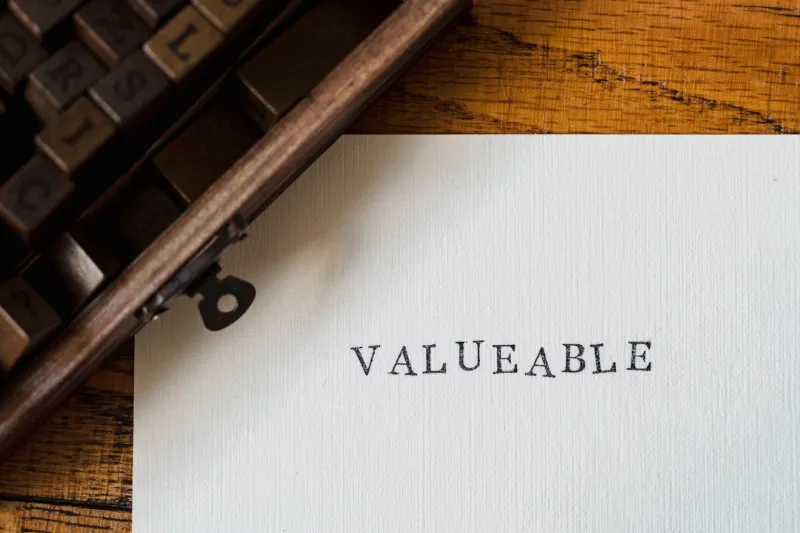
There's a particular sound that keeps showing up in writing spaces across the country right now. It's not the soft tap of a MacBook keyboard or the ambient hum of a lo-fi playlist bleeding through AirPods. It's the sharp, deliberate clack of a typewriter — mechanical, unapologetic, and completely incapable of sending your draft to a server farm somewhere outside Phoenix.
For a specific and growing slice of American writers, that inability is the whole point.
The Machine That Doesn't Know Your Name
Ask Delia Voss, a fiction writer based in Portland who switched to a 1970s Olivetti Lettera 32 last year, why she made the change, and she doesn't reach for nostalgia. "It's not about romanticizing the past," she says. "It's about the fact that my laptop knows everything. It knows when I started a document, how long I stared at a blank page, what I deleted. Google Docs is basically a surveillance log of my creative process. The typewriter doesn't care. It just prints."
That framing — the typewriter as a privacy tool rather than a vintage curiosity — is showing up more and more in conversations about how writers work. Cloud-based writing platforms have become so deeply embedded in the everyday writing process that most people don't stop to think about what they're actually agreeing to. Auto-save means your half-formed ideas are being transmitted somewhere. Version histories mean your abandoned sentences have a permanent record. For some writers, that's fine, even useful. For others, it's started to feel like performing creativity under observation.
The anxiety isn't entirely abstract. There's a real and documented discomfort among writers about AI companies training on creative work — sometimes without clear consent — and the fact that anything you type into a connected platform is, at minimum, data. The typewriter sidesteps all of it. It is, in the most literal sense, a closed system.
Focus as a Form of Rebellion
Beyond privacy, the writers making this shift talk about something harder to quantify: what it feels like to write when the internet simply isn't an option.
Marco Ellison, a poet and essayist in Chicago, describes the first few weeks on his Hermes 3000 as "genuinely uncomfortable." "I kept reaching for a browser that wasn't there," he says. "My brain wanted to check something, look something up, verify a fact mid-sentence. And I couldn't. So I just had to keep writing. And it turned out, a lot of the time I didn't actually need to check anything. I was using the internet as an escape hatch from the hard part of writing."
That hard part — the sustained, uncomfortable attention that serious writing requires — is exactly what the digital environment has made harder to access. Notifications, browser tabs, the low-grade awareness that your inbox exists: these aren't just minor annoyances. Cognitive research consistently suggests that even the presence of a smartphone on a desk reduces available working memory. A typewriter doesn't ping. It doesn't suggest. It doesn't offer an easier thing to do.
What writers are describing, essentially, is intentionality by constraint. When revision requires retyping, you think harder before you type. When there's no undo button, each word carries a little more weight. Whether that pressure produces better writing is subjective — but the writers who've committed to the practice say it changes how they think about sentences in ways that feel meaningful.
What You Give Up
None of this comes without real costs, and the writers involved are mostly honest about them.
Typed pages have to be transcribed eventually — unless you're committed to a fully analog workflow all the way to submission, which almost no one is, because literary magazines and publishers don't accept physical manuscripts. That transcription step is tedious and time-consuming. Editing is slower. Collaboration is harder. Research mid-draft requires a separate device or old-fashioned note-taking. The practical friction is substantial.
There's also the access question. A functioning vintage typewriter, properly serviced, can run anywhere from $80 to several hundred dollars. Ribbons cost money. Repairs require specialists who are increasingly rare. This isn't a movement available to everyone, and the writers participating in it are, by and large, people with enough financial cushion and schedule flexibility to absorb the inefficiency. It's worth naming that plainly.
And then there's the literary ecosystem problem. The contemporary writing world runs on digital infrastructure — social platforms for building audiences, email newsletters for reader relationships, digital submissions for publishing. You can draft on a typewriter and still need to exist online to have a career. The escape is partial at best.
Nostalgia or Necessity?
The honest answer is probably both, and the distinction matters less than it might seem.
There's undeniably a romantic pull to the typewriter — the physicality of it, the sound, the way a finished stack of pages feels different from a file in a folder. Some of what's happening here is aesthetic, and there's no shame in that. Aesthetics shape how we work and how we feel about our work. If the ritual of rolling a fresh sheet into a machine helps someone actually sit down and write, that's not nothing.
But the writers who are most articulate about this shift describe something beyond vibes. They describe a desire to create work that exists, at least in its earliest form, outside the attention economy — outside the systems that are designed to track, optimize, and extract value from every moment of human activity, including the private, uncertain, often embarrassing process of making something new.
In that sense, the typewriter renaissance isn't really about typewriters. It's about the question of what conditions creative work actually needs, and whether the platforms that now host most of our writing are genuinely serving that work or subtly shaping it toward something more legible, more trackable, more useful to systems that have nothing to do with literature.
The clack of keys that can't connect is, for some writers, the sound of that question being taken seriously.
And in a literary moment defined by platforms that want to know everything — what you read, how long you lingered, what you almost wrote before you deleted it — there's something genuinely interesting about a machine whose only output is ink on paper, and whose only memory is yours.